BiCoTa – Episode #7 Ensonic & Gero - DIY Controllers
Posted on Sonntag, Juni 21, 2026
Show Notes
In this nerdy and inspiring episode of the Picota Bitwig Community Talk, hosts Odo and Jürgen are joined by two software developers-turned-hardware-builders, Gero and Stefan aka ensonic. The conversation dives deep into the world of DIY MIDI controllers, exploring how accessible microcontroller technology has made it possible for musicians to build custom hardware that perfectly fits their workflow.
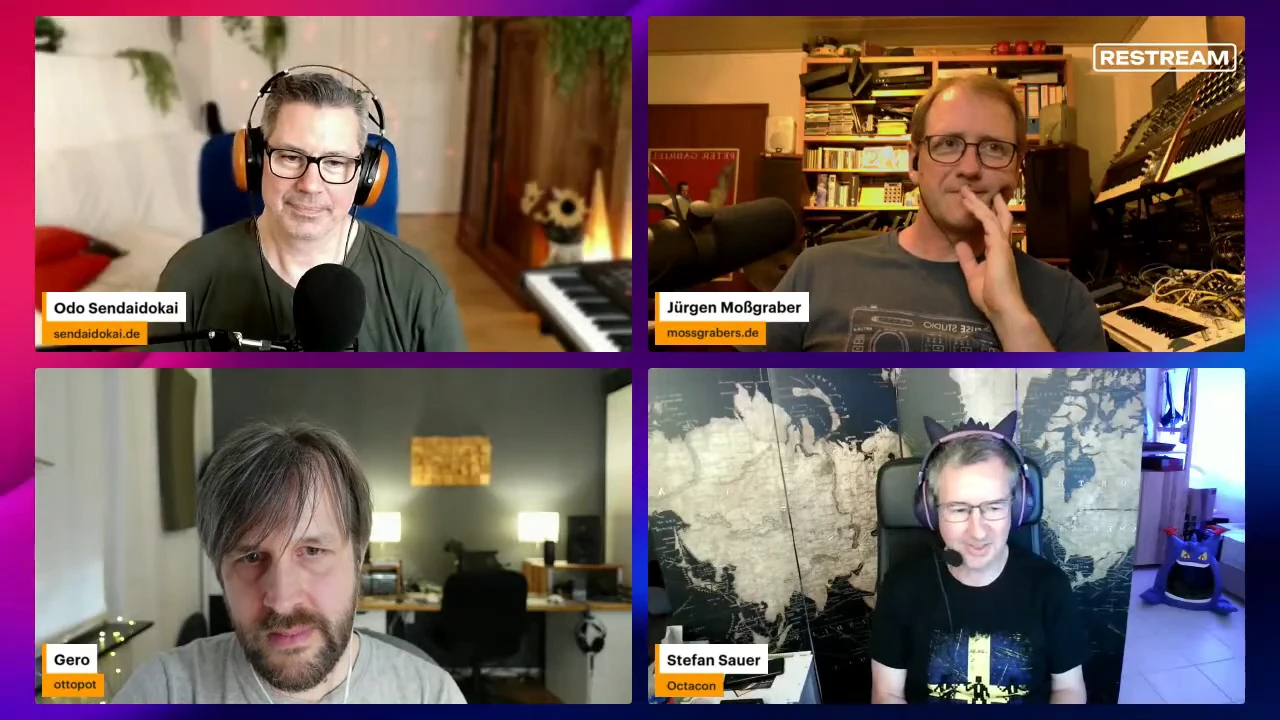
Odo Sendaidokai - Jürgen Moßgraber - Gero - Stefan aka ensonic
The episode covers the journey from software development to hardware tinkering, the technical challenges of building custom controllers, and the philosophy behind open-source hardware design. The guests showcase their creations: the Autopot (Gero’s endless potentiometer controller) and the Octacon (Stefan’s 8-knob controller with displays), both designed to solve specific pain points in Bitwig Studio.
Be encouraged
You don’t need an engineering degree to build a MIDI controller-YouTube tutorials, Arduino documentation, and online communities make it accessible to anyone willing to learn.
Start small and iterate-begin with a simple project like a single knob or foot switch, then gradually expand as you gain confidence.
The cost is surprisingly low-individual projects can be built for €30-€180, with most expensive components having affordable alternatives.
Open source makes it collaborative-both guests have shared their full designs, inviting others to improve upon their work.
Endless potentiometers solve real problems-they eliminate the parameter takeover issues that plague traditional encoders and potentiometers.
Touch feedback improves workflow-preventing accidental parameter changes through touch-sensing knobs is a simple but powerful UX improvement.
Timetable
7:05 - The Journey from Music to Hardware - Gero and Stefan share their musical backgrounds, from tracking on C64 and Amiga computers to eventually discovering Bitwig Studio. Both guests highlight Bitwig’s modulation system and Linux compatibility as key factors in their switch from other DAWs.
25:16 - The Philosophy of DIY Controllers - The discussion explores why building your own MIDI controller is now more accessible than ever, thanks to affordable microcontrollers like Arduino and Raspberry Pi Pico. Both guests emphasize that the barrier to entry is extremely low-starting with a simple blinking LED project can lead to building a fully functional controller.
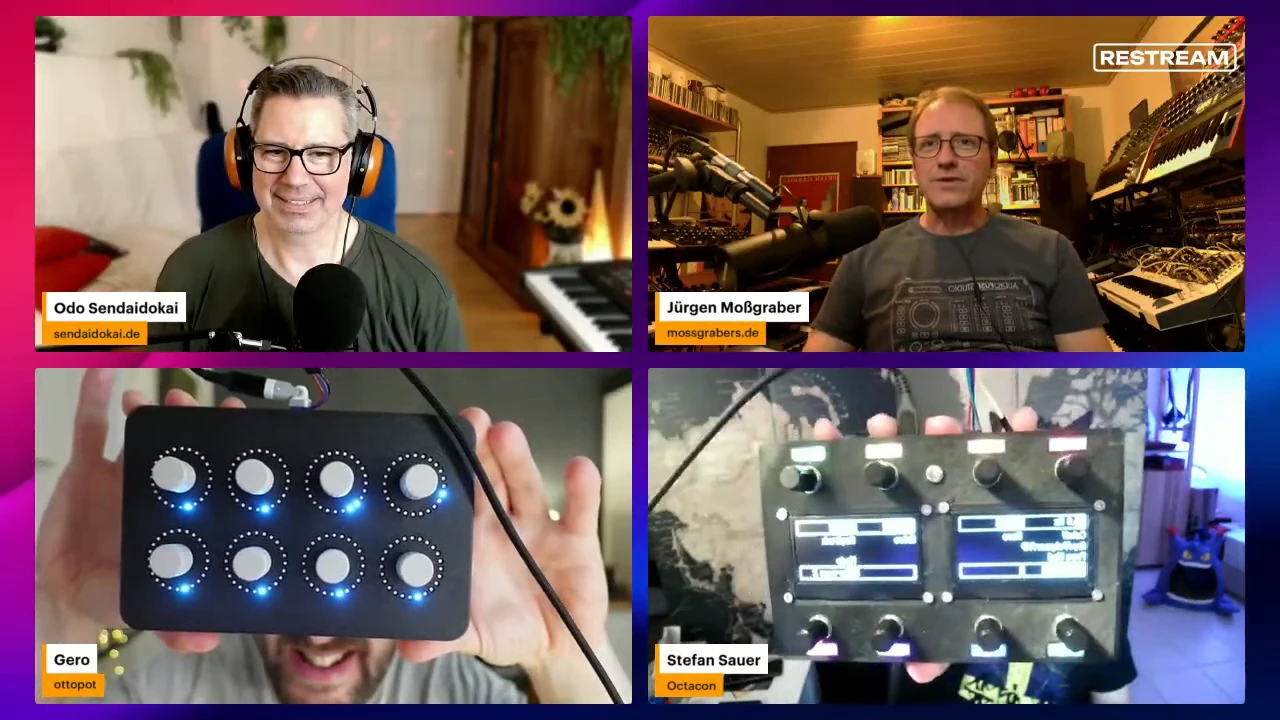
The two controllers - Ottopod and Octacon
27:00 - Endless Potentiometers vs. Encoders - A significant portion of the conversation focuses on the technical choice between encoders and potentiometers. Gero explains his breakthrough with endless potentiometers, which combine the tactile feel of analog pots with the infinite rotation of encoders-solving the frustrating “parameter takeover” problem.
47:00 - The Prototyping Process - Stefan walks through his prototyping journey:
- Starting with breadboards and jumper cables
- Iterating through PCB designs (3 versions required)
- Learning from mistakes-“burning components is part of the process”
- Using affordable PCB manufacturing services for custom circuit boards
- 3D printing custom enclosures and light diffusers
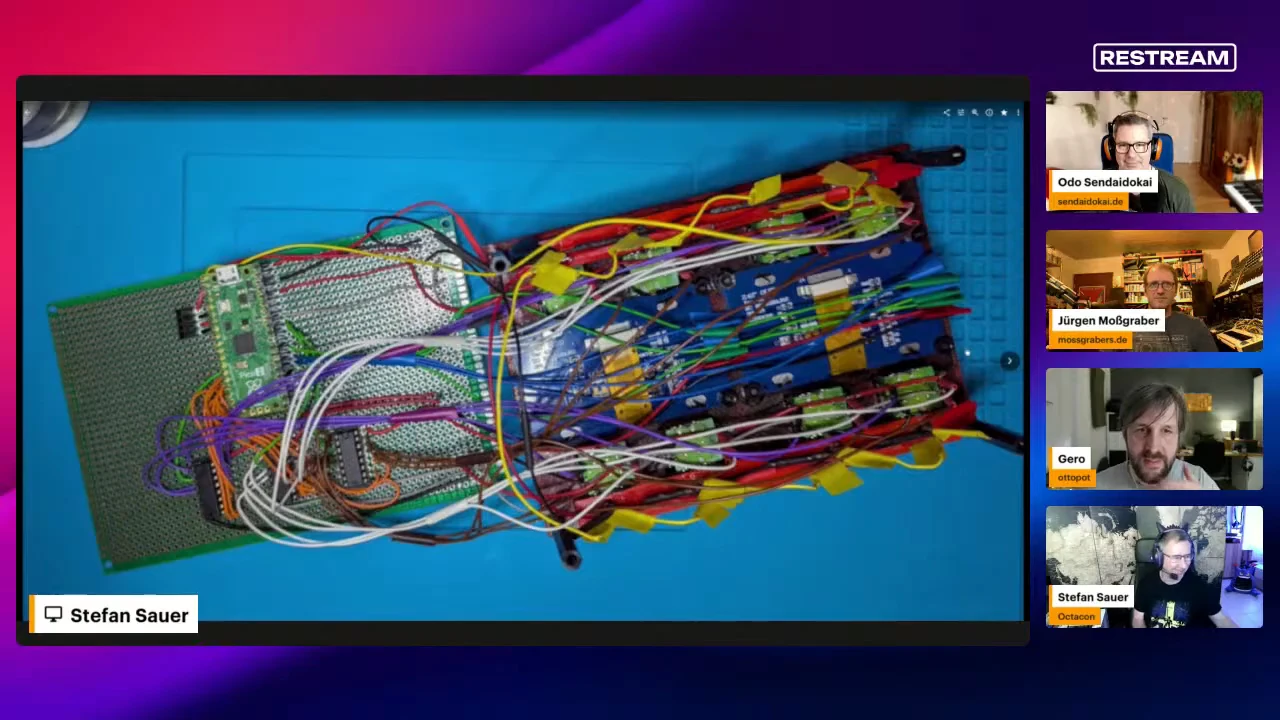
breadboards and jumper cables
1:03:00 - Touch Sensitivity and Feedback Mechanisms - The guests discuss advanced features they’re working on:
- Touch-activated knobs (to prevent accidental parameter changes)
- Haptic feedback using vibrators under potentiometers
- Visual feedback through LED rings and small displays
- Future plans for motorized knobs and tactile end-stop feedback
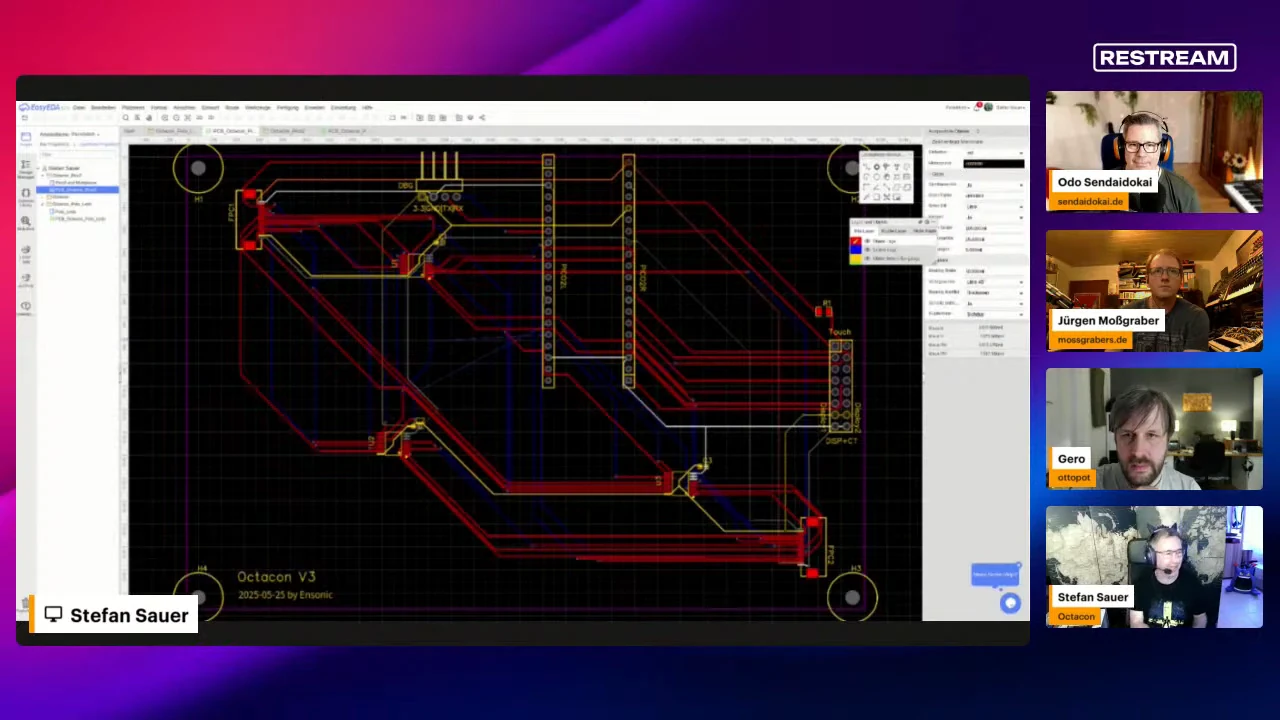
Future plans
1:22:50 - Open Source Philosophy - Both Gero and Stefan have made their projects fully open source under GPL licenses, sharing code, schematics, and 3D printing files on GitHub. Their goal is to make DIY controller building accessible to everyone, not to commercialize their designs.
1:35:00 - Bitwig 6.1 Sampler Updates - The hosts and guests discuss the exciting new features in Bitwig 6.1’s sampler:
- Pitch detection and analysis
- The new “flatten” function for pitch correction
- Independent pitch and speed control
- Improved workflow for working with samples
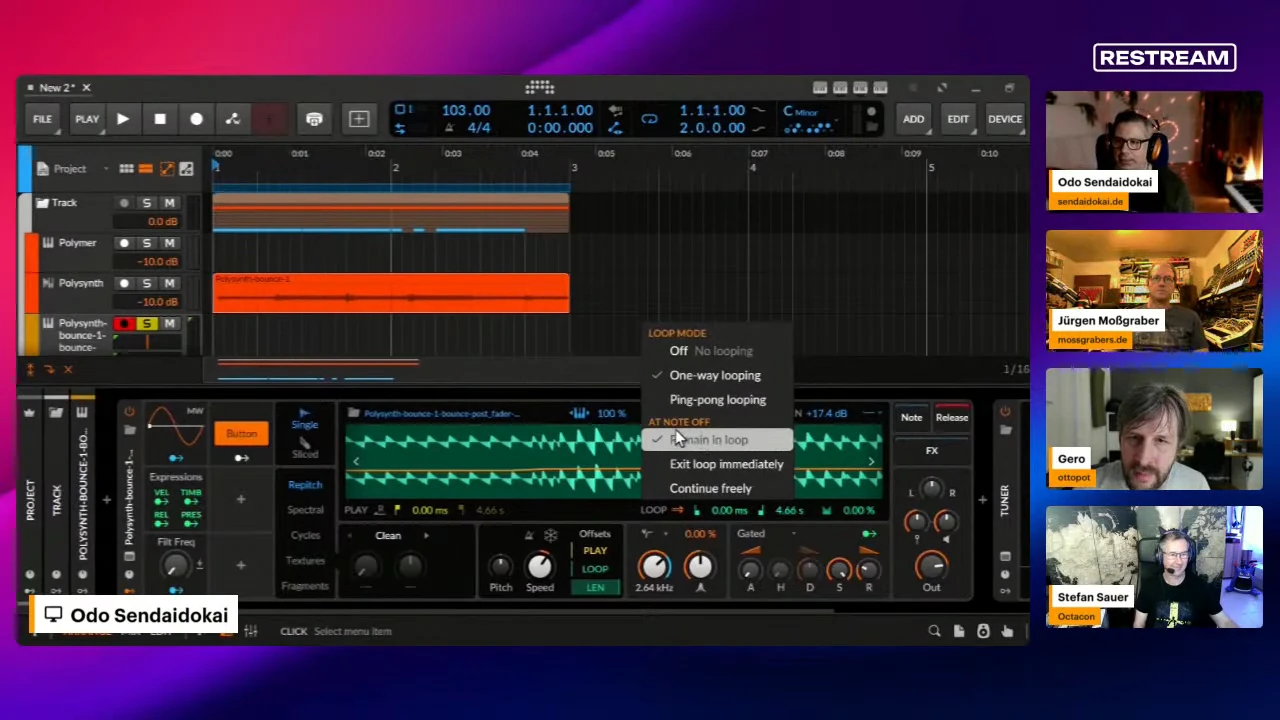
features in Bitwig 6.1’s sampler
Projects & Links
Ottopot (Gero)
- 8-knob controller with endless potentiometers
- LED rings around each knob
- Open source (GPL)
- GitHub repository available
- https://codeberg.org/gerotakke/ottopot
Octacon (ensonic Stefan)
- 8-knob controller with endless potentiometers
- Two OLED displays for parameter names and values
- Open source (GPL)
- GitHub repository available
- Complete schematics in KiCad format
- 3D printable enclosure files in OpenSCAD
- https://github.com/ensonic/octacon
Resources
Here are the project websites for the tools and components mentioned in the episode:
- Arduino microcontrollers - Open-source electronics platform for building digital devices and interactive objects (https://www.arduino.cc)
- Raspberry Pi Pico 2 - Affordable microcontroller board with dual ARM or RISC-V cores, 520KB SRAM (https://www.raspberrypi.com/products/raspberry-pi-pico-2)
- KiCad - Open-source PCB design software for schematic capture and board layout (https://www.kicad.org)
- EasyEDA - Web-based PCB design tool integrated with manufacturing services (https://easyeda.com)
- OpenSCAD - Open-source 3D CAD modeler using a script-based approach (https://openscad.org)